Why Regular Internal Racking Inspections by a PRRS Are Essential for Warehouse Safety
In every warehouse, pallet racking plays a critical role in daily operations. It holds thousands of kilograms of stock, supports workflow efficiency, and underpins the entire storage system. Yet despite its importance, racking is often overlooked — inspected only when something goes wrong or when an annual expert inspection is due.
Under HSE guidance (HSG76) and SEMA best practice, businesses are required to carry out regular internal racking inspections conducted by a PRRS — Person Responsible for Racking Safety. These internal checks form the backbone of safe racking management and are just as important as your annual SEMA inspection.
At SHS Racking Inspections, we help businesses understand and implement these requirements, so their racking stays safe, compliant, and operational year‑round
Tagline
What Is a PRRS?
A Person Responsible for Racking Safety (PRRS) is a trained individual within your organisation who oversees the ongoing safety of your pallet racking. Their role is not to replace a professional SEMA inspection, but to ensure that racking is monitored regularly and that issues are identified early.
A PRRS should have:
- A solid understanding of racking components
- Knowledge of damage categories (Green, Amber, Red)
- Awareness of safe working loads and load notices
- The ability to recognise damage, misuse, and hazards
- Authority to act when unsafe conditions are found
This role is essential for maintaining compliance with HSE expectations.
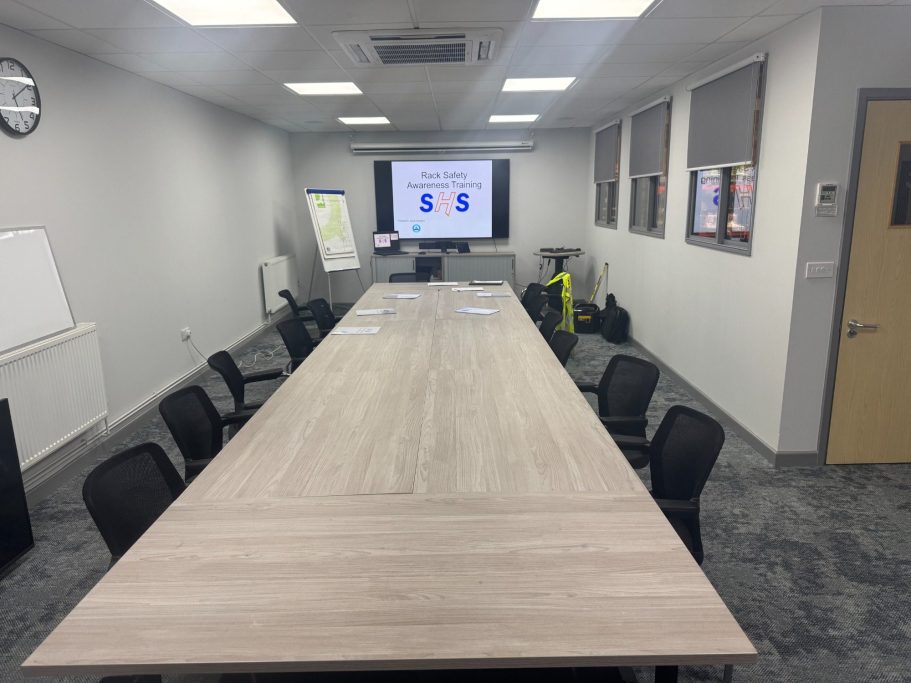
Rack Safety Awareness Training
The Rack Safety Inspection Training course is a half day course providing delegates with advice and guidance to enable them to carry out weekly/monthly “in-house” rack inspections for their own company’s racking in accordance with SEMA guidelines. It covers legislation, types, and frequency of inspections, responsibilities of users and suppliers, inspection record keeping, and action points.
Main subjects covered include:
RACK INSPECTIONS
- The need for rack inspections
- Different types of racking, what the component parts are and what they do.
- Legislative requirements
- Types of inspection Frequency – how often should you inspect racking?
- Records to be kept
RESPONSIBILITIES
- Who is responsible for what?
- Requirements of different types of storage systems
- Particular end user responsibilities
- Responsibilities of the original equipment supplier
RISK ASSESSMENTS
- What to look for during the inspection
- Damage identification and grading using the SEMA RED /AMBER / GREEN traffic light system.
- Loading configurations and pallet spacing
- Load capacity signage
- Action points and corrective measures
We aim to include information that is useful and relevant to the racking systems in use within your warehouse.
Why Take the Course?
- Legal Compliance: Ensures your business meets UK Health and Safety Executive (HSE) standards, particularly the HSG76 guidelines for warehouse safety.
- Hazard Identification: Teaches participants how to recognize structural damage, identify missing components, and assess safe load limits.
- Cost Savings: Proactively spotting damage prevents product loss and expensive emergency repairs.
- Actionable Records: Gives staff the exact tools to conduct and log regular inspections between formal annual audits.
Our training takes place on-site, where delegates will learn practical and theory skills to identify racking damage and have the knowledge to know how to handle any potential issue according to health and safety guidelines.
The half day course (approximately 4 hours) is presented by a SEMA Approved Racking Inspector who will provide your staff with the required skills to inspect racking on a weekly basis. Well-suited for groups of 2-8 delegates, the course provides both extensive information and hands on training
Why Internal Inspections Are Required
HSE’s HSG76 – Warehousing and Storage sets out a clear expectation: Businesses must carry out regular internal racking inspections in addition to expert annual inspections.
These internal checks are required because:
- Racking is vulnerable to daily wear and tear
- Forklift impacts often go unreported
- Damage can escalate quickly if not addressed
- Unsafe racking poses a serious collapse risk
- Early identification prevents costly repairs and downtime
Regular PRRS inspections ensure issues are caught before they become dangerous.
How Often Should PRRS Inspections Be Carried Out?
HSE guidance recommends:
- Weekly internal inspections by the PRRS
- Immediate checks after any known impact or incident
- Ongoing monitoring of high‑risk areas (loading zones, tight aisles, fast‑moving stock locations)
These inspections should be recorded, dated, and acted upon — forming part of your warehouse’s safety management system.
What PRRS Inspections Should Cover
A PRRS inspection is visual and systematic. It should include checks for:
- Upright damage, dents, twists, or buckling
- Beam deflection or damage
- Missing or incorrect locking pins
- Loose or missing floor fixings
- Misaligned frames or leaning uprights
- Damaged bracing
- Overloading or incorrect pallet placement
- Missing or inaccurate load notices
- Signs of impact from MHE (forklifts, reach trucks, pallet trucks)
The PRRS should categorise any damage using the SEMA traffic‑light system:
- Green – No action required
- Amber – Action required soon; monitor closely
- Red – Serious damage; unload immediately and repair
This system ensures consistent, structured decision‑making.
Why PRRS Inspections Protect Your Business
Regular internal inspections provide several key benefits:
- Reduced risk of collapse
- Improved safety for staff and MHE operators
- Early identification of damage
- Lower repair costs
- Better compliance with HSE and SEMA guidance
- Clear documentation for audits and insurance
Most importantly, they ensure your racking remains safe between professional inspections.
PRRS Inspections vs. Expert SEMA Inspections
A PRRS inspection is not a replacement for an annual expert inspection by a SEMA Approved Racking Inspector (SARI). Instead, both work together:
- PRRS inspections – Frequent, internal, visual checks
- SARI inspections – Detailed, technical, independent assessments
Together, they create a complete racking safety system.
Supporting Your PRRS
At SHS Racking Inspections, we help businesses strengthen their internal safety processes by:
- Providing annual expert SEMA inspections
- Offering PRRS awareness training
- Advising on damage categorisation and reporting
- Helping create inspection routines and documentation
- Supporting compliance with HSG76 and SEMA guidelines
A trained PRRS combined with independent inspections ensures your racking is safe, compliant, and professionally managed.